Cowleys Pest Services Before & After Photos
Click on a photo to enlarge.
Being Proactive to Prevent Rodents from Infesting Home in Sewaren, NJ
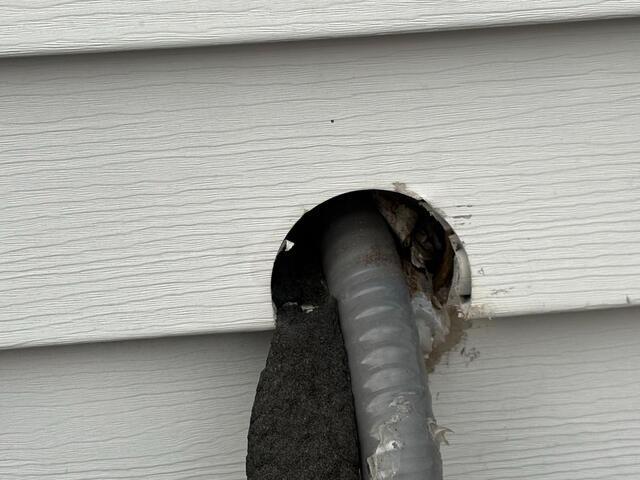
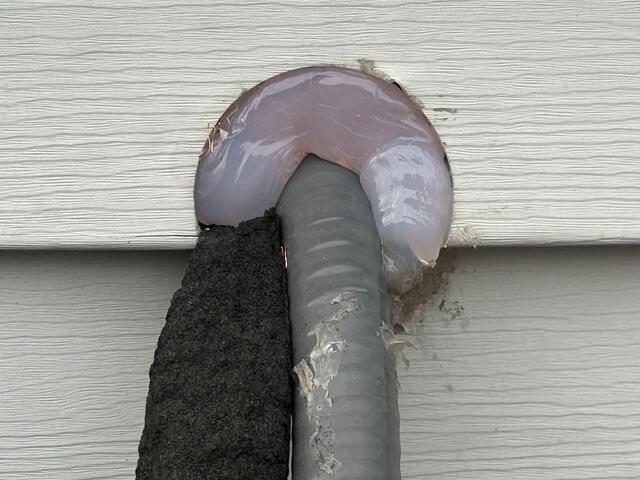
As we were treating this property in Sewaren, NJ, we discovered an opening around a utility pipe. Fortunately, the homeowner isn’t having an issue with mice or rats…but if this is left alone…it’s only a matter of time until he does.
So we stuffed some chew-proof metal mesh inside the opening. Rodents HATE the taste and feel of this material. Afterward, we sealed the opening with a waterproof premium adhesive and then smoothed it out. Now the area is properly excluded from rodents.
Excluding Bats in Morganville, NJ


This homeowner in Morganville, NJ had an issue with bats roaming around his attic, so our Nuisance Wildlife Division was sent out and safely removed them from the home. Now that the bats are gone, we need to make sure they don't get back in!
After a thorough examination of the home, we determined that the bats were able to enter the home via the ridge vent & the attic fan. To fix this, we installed Ridge-Guard® and an attic fan cover. Ridge-Guard® secures and reinforces the ridge vent shingles so that bats, flying squirrels, and other nuisance wildlife are unable to enter. The attic fan covers are made out of heavy-duty 18 Gauge expanded Galvannealed steel mesh and prevents all nuisance wildlife from entering the home through the attic fan. Not only is the home properly secured from bats, but all nuisance wildlife too!
Excluding the Squirrels from the Gable Vent in Morganville, NJ


This homeowner in Morganville, NJ, had an infestation of squirrels in their attic. After a thorough inspection, we discovered that they were entering the home via the gable vent. Squirrels infesting a home via the gable vents is very common as over time, the gable vents get weathered and squirrels (and other nuisance wildlife) have no problem ripping away these vents to find shelter inside a home. After installing our retrieval devices, in a short amount of time, we successfully and safely retrieved all the squirrels and relocated them to a new, humane location.
Before we left, we removed the broken gable vent, disinfected the attic, and installed a louvered vent guard. This material is made out of heavy-duty Galvannealed steel (which means it won't rust) and is customized to accommodate vents of all shapes and sizes. Now that it is installed, squirrels and other nuisance wildlife will no longer be able to enter the attic through the gable vent.
Unsuspected Homeowner Gets Stung by Bald-Faced Hornet in Morganville, NJ
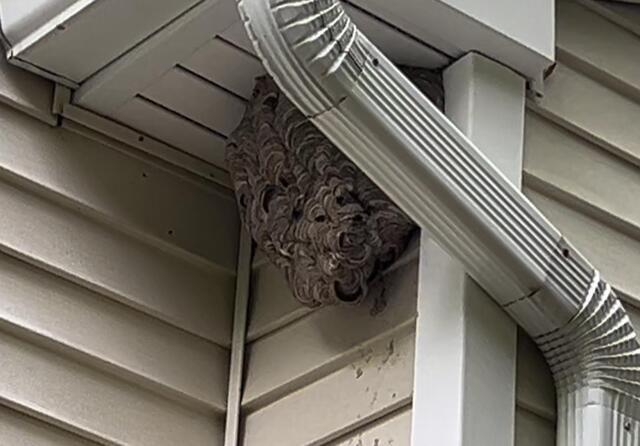
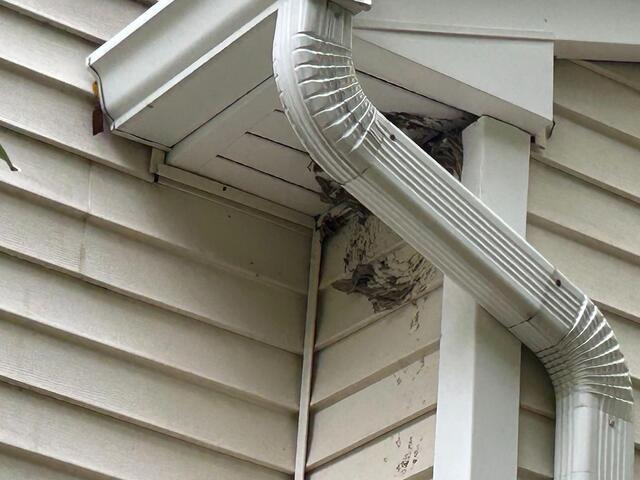
As this customer in Morganville, NJ was working out in his backyard, he noticed a rather large hornets nest on the side of his home! Since he is a Home Protection Plan customer, he called up Cowleys, and we were sent out. After equipping our protective bee suits we took a closer look at these insects and identified them as bald-faced hornets. Bald-faced hornets are social stinging insects that have white markings on their face. They're EXTREMELY aggressive and territorial. So aggressive that if anyone or anything comes within close proximity of their nest, they will attack!
Using our extendable pole, we liberally treated the nest with a knockdown aerosol application and then a knockdown dusting product. Both of these treatments will exterminate the bald-faced hornets quickly. After some time had passed, we removed the nest and disposed of it properly. Lastly, we applied a liquid non-repellant residual to the area where the nest was. This will neutralize any bald-faced hornets that return to this area and prevent them, and any other stinging insect, from building a new nest.
Mice Living in Basement Insulation in Marlboro, NJ


We were sent out on a service call to a new customers home in Marlboro, NJ, to treat for mice. The owner was wondering why she had mice to begin with because she regularly deep cleaned her home. Well, about 30 yards away from the property was a heavy wooded area with a lot of water and, after a thorough inspection of the home, there were a lot of gaps around the basement vents. The mice were coming from the woods and, since it was getting cold outside, making there way into the basement!
As we inspected the basement, we found a ton of mice droppings and tunnels throughout the insulation. Mice will often tunnel in the insulation to create a warm nesting place. First, we carefully removed all the mice droppings. Next, we installed several rodent bait stations throughout the basement and along the exterior of the home.
Afterward, we stuffed all the openings around the basement vents with chew-proof, stainless steel mesh and then sealed them with a waterproof, premium adhesive. Lastly, we scheduled several follow up visits to replenish the bait in the rodent bait stations and to monitor the mice activity.