Cowleys Pest Services Before & After Photos
Click on a photo to enlarge.
Removing the Yellow Jackets Nest in Woodbridge, NJ
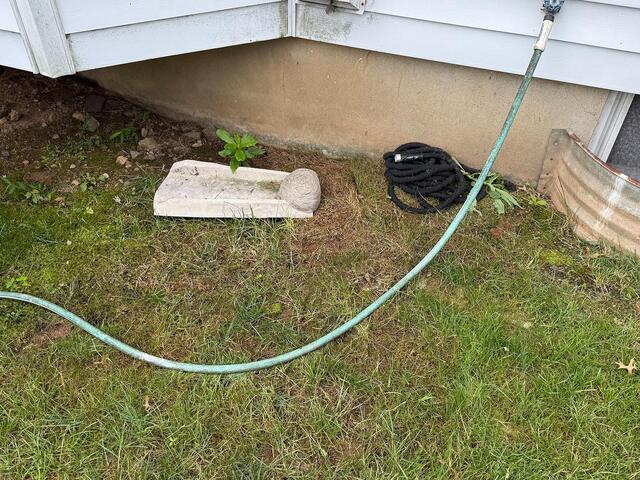
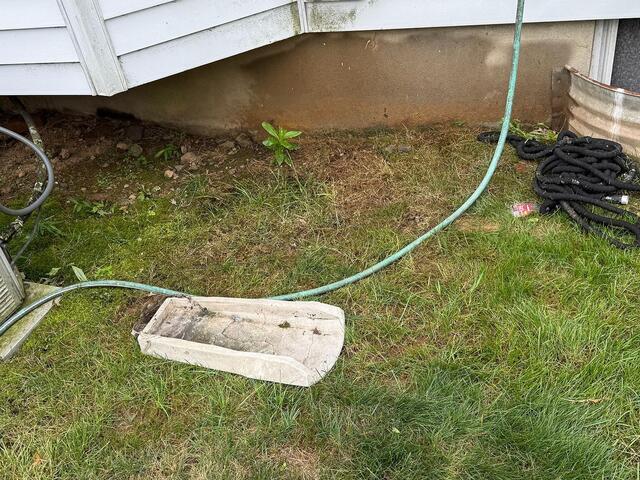
This homeowner in Woodbridge, NJ was doing some yard work in his backyard, when he was suddenly attacked by a number of yellow jackets. Luckily, he wasn't allergic to bee stings, but his daughter is, so he contacted Cowleys and we were sent out.
After equipping our protective bee suit, we started inspecting the backyard. A few moments into our inspection, we found the yellow jackets nest. It was attached to the stone splash block that was hidden underneath a portion of the home. For treatment, we injected a knockdown dusting application, waited a few moments, and then injected a knockdown aerosol application. Both of these products are designed to rapidly eliminate the yellow jackets. After some time had passed, we removed the nest and disposed of it properly.
Dig Defense® will Keep Wildlife from Entering Home in Avenel, NJ


An Avanel, NJ homeowner contacted Cowleys for a nuisance wildlife technician to take care of a wildlife problem, and I was dispatched to his home. He told me that animals, possibly opossums, were gaining access under his cantilevered flooring. I have an interest in building construction and, to me, cantilevers are a great example of smart home building. With standard framing construction, joists are extended to a girder at the front end, and the framing looks like a bed frame. However, with cantilevered flooring, instead of a girder at the end of the joists, a beam is placed under the joists, so they can extend past that support.
That overhang that is past the beam is what’s called the cantilever. Using this construction, you can extend a home’s footprint and save on material costs— as long as it’s done right. For a safe cantilever overhang, you have to consider the strength of the particular wood and the spacing of the joists. Also, since the beam acts as a fulcrum, you have to make sure that the flooring can handle the weight put on the cantilever by taking into account the backspan of the joists (the distance of the joist up to the beam). Cantilevered engineering is like building a playground teeter-totter that you don’t want to budge an inch when weight is placed on the unsupported side. Unfortunately, some wildlife was as impressed with this cantilevered flooring as I was — and they wanted an up-close view by getting into the spacing under the flooring extending over the foundation!
For this particular job, the animals had made of mess of things with their clawing and droppings, and I needed to remove all of the debris and contaminated insulation underneath. I was able to access the area through the ceiling of the basement. After removing the debris, I sanitized and deodorized the entire area so that no other wildlife would be attracted to the same area by the left-over scent. For added measure, I blocked off every bay in the framing with Silver-Glo insulation and spray foam. Finally, I installed a Dig Defense® on the exterior portion of the cantilever and the rear deck to keep wildlife from being able to gain access. With a dig defense, the area invaded by wildlife is blocked by underground fencing to prevent them from re-entering.
Crawl space makeover in Avenel, NJ


This homeowner in Avenel, NJ contacted Cowleys for a crawl space improvement. Cowleys has an experienced crew that handles various crawl space improvements, up to and including full encapsulation and whole-house dehumidification for homeowners with water and moisture issues. These issues often result in mold growth that then affects the indoor air quality of the home.
This particular installation job was more limited, and we are more than happy to adjust the scope of our work to meet the particular needs of the homeowner. The homeowner did not require full encapsulation (Cleanspacing”) because the crawl space was dry and did not have humidity levels that would be conducive to mold growth. However, the customer decided that it was time to replace his flimsy 6-mil “contractor bag” vapor barrier with something more durable and substantial in order to deal off the dirt and prevent dust and odors that periodically permeated the living areas above.
To meet the needs of this homeowner we removed the old barrier and replaced it with our tear-resistant heavy-duty 20-mil CleanSpace vinyl vapor barrier. This vapor barrier is only available to licensed Basement Systems dealers. Our barrier is a specially engineered film made of layers of high density and low density polyethylene, and you can walk on it without worrying about rips and tears. With its mil thickness, this barrier has the durability of a plastic tarp.
The homeowner was quite pleased with our installation work and informed us that if he ever needed additional crawl space renovations, he’d have us back in an instant.
Fixing Up what the Raccoons Damaged in Avenel, NJ
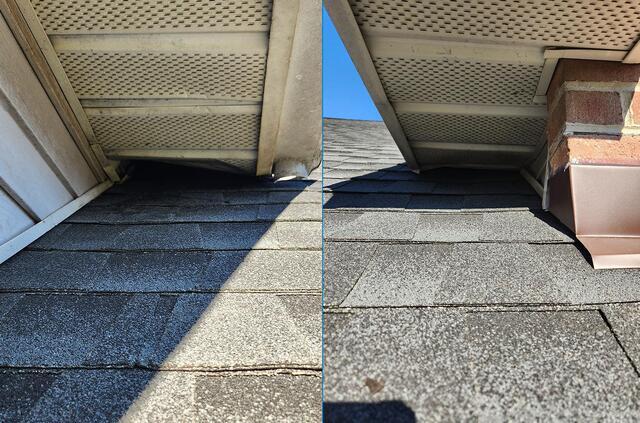
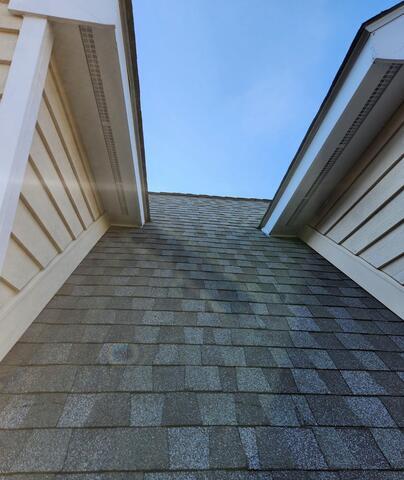
This customer in Avenel, NJ had raccoons residing in his home, primarily in the attic. Our Nuisance wildlife team was dispatched to safely retrieved these nuisance raccoons. After examining the exterior of the home, we determined that the raccoons got into the attic via two areas of the soffit.
We installed a one-way device over each one of the access points and then temporarily enclosed the areas with hardware cloth. We then set-up several baited traps near the access points. The one-way will allow the raccoons to leave the area safely but prevent them from getting back in.
Shortly after setting up our devices, we safely retrieved the raccoons and took them to a new, safer location. We then disinfected the attic and installed sturdy metal flashing over each one of the access points.
Yellow Jacket Nest Found in an Old Tire in Avenel, NJ
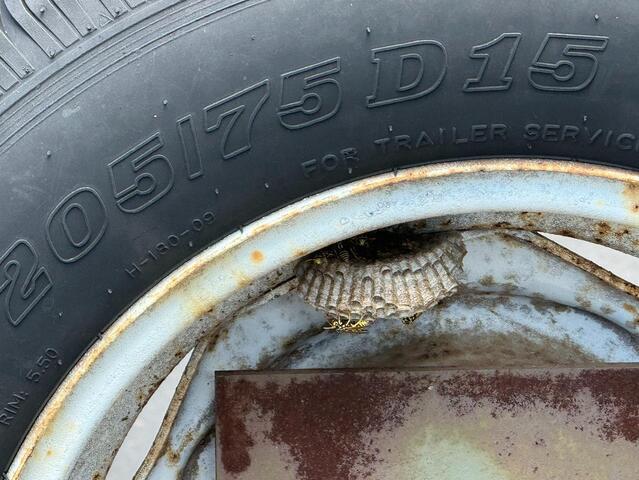
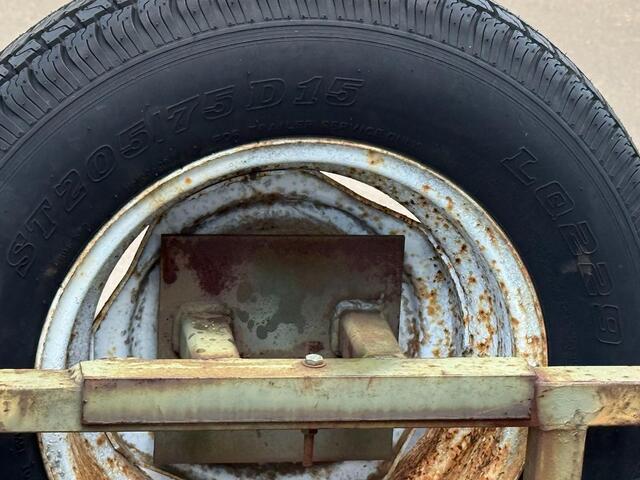
As we were treating this commercial property in Avenel, NJ, we spotted some yellow jackets flying around an old tire that was resting on the side of the building. We went to examine the area and found a small yellow jacket nest actually inside the old tire! We informed the owner and he mentioned that, once the yellow jackets are exterminated, he will dispose of the old tire.
For treatment, we injected a knockdown dusting application directly into the nest. This product is going to quickly neutralize the yellow jackets. After a few moments went by, we also applied a liquid residual around the old tire This treatment is going to exterminate any yellow jackets that return to this area and prevent them, and other stinging insects, from nesting here.