Cowleys Pest Services Before & After Photos
Click on a photo to enlarge.
Sealing the Mice Entry Points in Sea Girt, NJ


After setting up our rodent bait stations to get a handle on the mouse infestation at this home in Sea Girt, NJ, we're returning for a follow up visit. After we replenished the bait in all the stations, we stuffed all the access points with chew-proof metal mesh. Rodents typically don't like chewing through metal because it's extremely uncomfortable for their teeth and gums. Next, we sealed all the openings with a premium, waterproof adhesive. The combination of the two materials makes for a great deterrent. We'll return for a few more follow-up visits to monitor the mice infestation and replenish the bait stations as needed.
Protecting the Porch from Future Fox Intrusions in Sea Girt, NJ


This customer in Sea Girt, NJ, had a fox nesting underneath her front porch, so she called Little Rascals for help and we were sent out. After setting up our retrieval devices, we safely obtained the fox and relocated it to a new, safer location. All that's left is to exclude the porch to prevent any future fox intrusions.
First, we dug a 12 inch deep trench around the entire porch and installed hardware cloth. The hardware cloth is installed 12 inches deep and 12 inches out from the bottom of the home. This creates a sturdy "L shaped" perimeter that will prevent foxes and other nuisance wildlife from digging and nesting underneath the home. Afterward, we removed the broken lattice around the entire porch, installed new lattice around the area, and placed more hardware cloth over it. Now the area is properly excluded from all future fox, and other nuisance wildlife, intrusions.
Gable Vent Open for the Nuisance Birds in Sea Girt, NJ
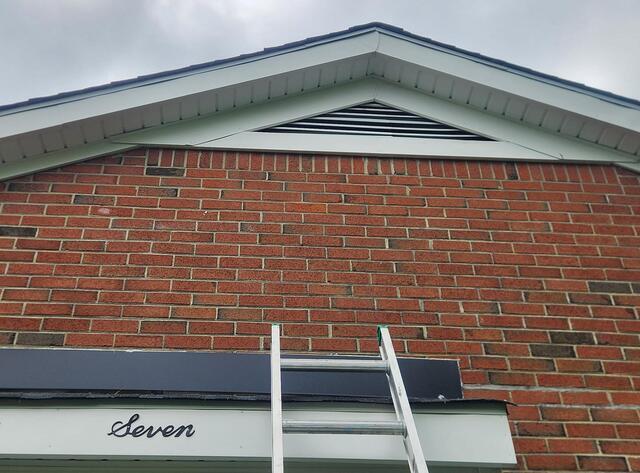
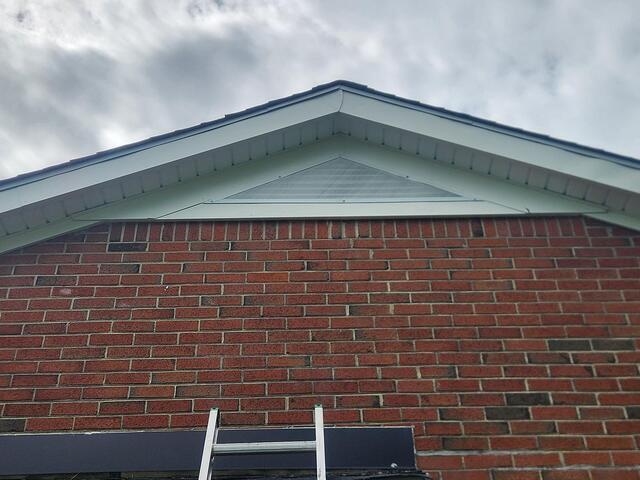
This customer in Sea Girt, NJ was having an issue with nuisance birds flying into his attic and nesting throughout the area. When we arrived we immediately identified how the birds were getting into the home - through the gable vent! The gable vent wasn't too damaged, but the gaps in it were wide enough for the birds to fly right in. This could also lead to a bat and flying squirrel infestation too!
After carefully removing all of the nesting debris and disinfecting the area with a solution that targets and eliminates bird mites, we installed a louvered vent guard. The louvered vent guard won't rust because it's made out of heavy-duty Galvannealed steel and we customized it to accommodate the shape of this gable vent. Now the area is properly protected from birds and all nuisance wildlife!
Garbage Cans Causing an Ant Infestation in Spring Lake, NJ


This homeowner in Spring Lake, NJ had ants all over her kitchen counter, so she called our office and we were sent out to inspect and treat. When we inspected the interior, we found some ant activity on the kitchen counter, but nothing too large. It wasn't until we went outside and found ants trailing from her garbage cans into the kitchen. The homeowner immediately started to clean out hr garbage cans and move them away from her home.
In the meantime, we applied a gel bait to the ant trails on the kitchen counter and treated the baseboards, cracks, and crevices in the kitchen and the two adjacent rooms with a liquid non-repellent. Afterward, we went outside and applied a granular bait to the grassy areas and then treated the entire exterior with a liquid residual. The ants will bring any of these treatments back to their nest and share them throughout their colony. A short while later, the ants are extreminated.
Dangerous hornets nest removed in Spring Lake, NJ


Recently, a homeowner in Spring Lake, NJ, contacted Cowleys because a hornet nest had formed on the soffit of her home. It was built fairly high up, so it wasn’t a major threat. Hornets can be aggressive and territorial and will attack if their nest is threatened. Here, there wasn’t much traffic around the nest and everyone was a safe distance away. The homeowner’s concern was that the hornets would gain access inside the home through the attic. To avoid this and any other issue with these stinging insects, I proceeded to remove the nest.
Hornet nests have an entry hole where the foraging wasps enter and exit. I watched their flight pattern in and out of the nest and set up my extension ladder on the opposite side of their activity. I had no interest in meeting these wasps head-on! I climbed the ladder and treated the nest with an aerosol that quickly knocks down the population. I then waited until the wasp activity dramatically slowed down. I reached by nest with the bee pole and gave it a good wack to knock it to the ground so that I could bag it and take it with me off the property. The homeowner was relieved that this nest was removed off her property. There are some people that have no tolerance for stinging insects, and this homeowner was one of them! I was glad to help.