Summer's Not Clocking Out Yet
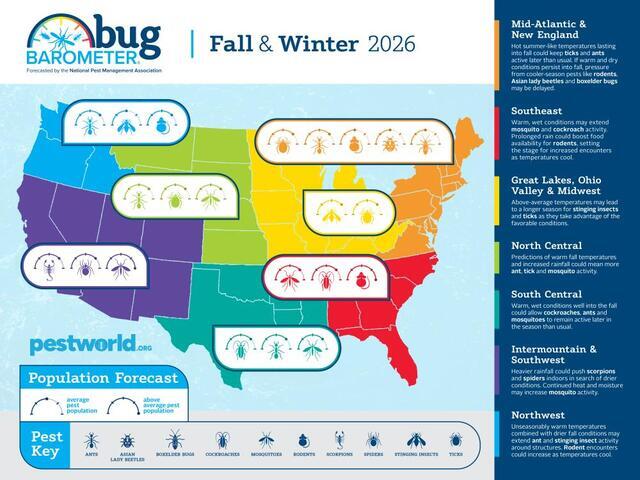
The National Pest Management Association (NPMA) today released its Fall & Winter 2026 Bug Barometer®. Twice a year, NPMA’s board-certified entomologists examine recent weather history along with long-term weather and drought forecasts and pest biology to provide a region-by-region look at the pest activity
This year’s outlook points to warmer-than-average fall temperatures across much of the continental U.S., which could give pests like ants, mosquitoes and ticks more time to forage and reproduce before cooler temperatures eventually prompt others, like cockroaches and rodents, to seek shelter indoors.
“Weather is one of several important pieces in forecasting pest activity, and with summer-like temperatures forecasted to continue, pests are going to take advantage of the extra time,” said Dr. Jim Fredericks, senior vice president of public affairs for NPMA. “Americans should follow smart prevention tips, like wearing EPA-registered repellent and working with a qualified pest control professional if you spot a pest problem in your home or yard.”
Expert Tips to Protect Your Home
NPMA recommends these steps to reduce the risk of pest infestations:
- Seal entry points: Check the exterior of your home for gaps or cracks and seal them with caulk or weatherstripping. Replace damaged screens and add door sweeps as needed.
- Remove standing water: Mosquitoes can breed in as little as a bottle cap of water. Empty birdbaths, gutters, flowerpots and other containers regularly.
- Maintain your yard: Keep grass trimmed and shrubs pruned away from your home's exterior. Remove leaf litter where pests can hide.
- Store food properly: Keep food in airtight containers and promptly clean up crumbs and spills.
Fix moisture issues: Repair leaky pipes and clogged drains. Ensure proper ventilation in basements, attics and crawl spaces. - Call in a professional: A qualified pest control professional, like us, can inspect your home, spot potential problem areas and recommend a prevention plan tailored to your property.
“The best time to address a pest problem is before it gets out of control,” added Dr. Fredericks. “A professional pest inspection can help catch potential risks and early activity, helping protect your health and property.”